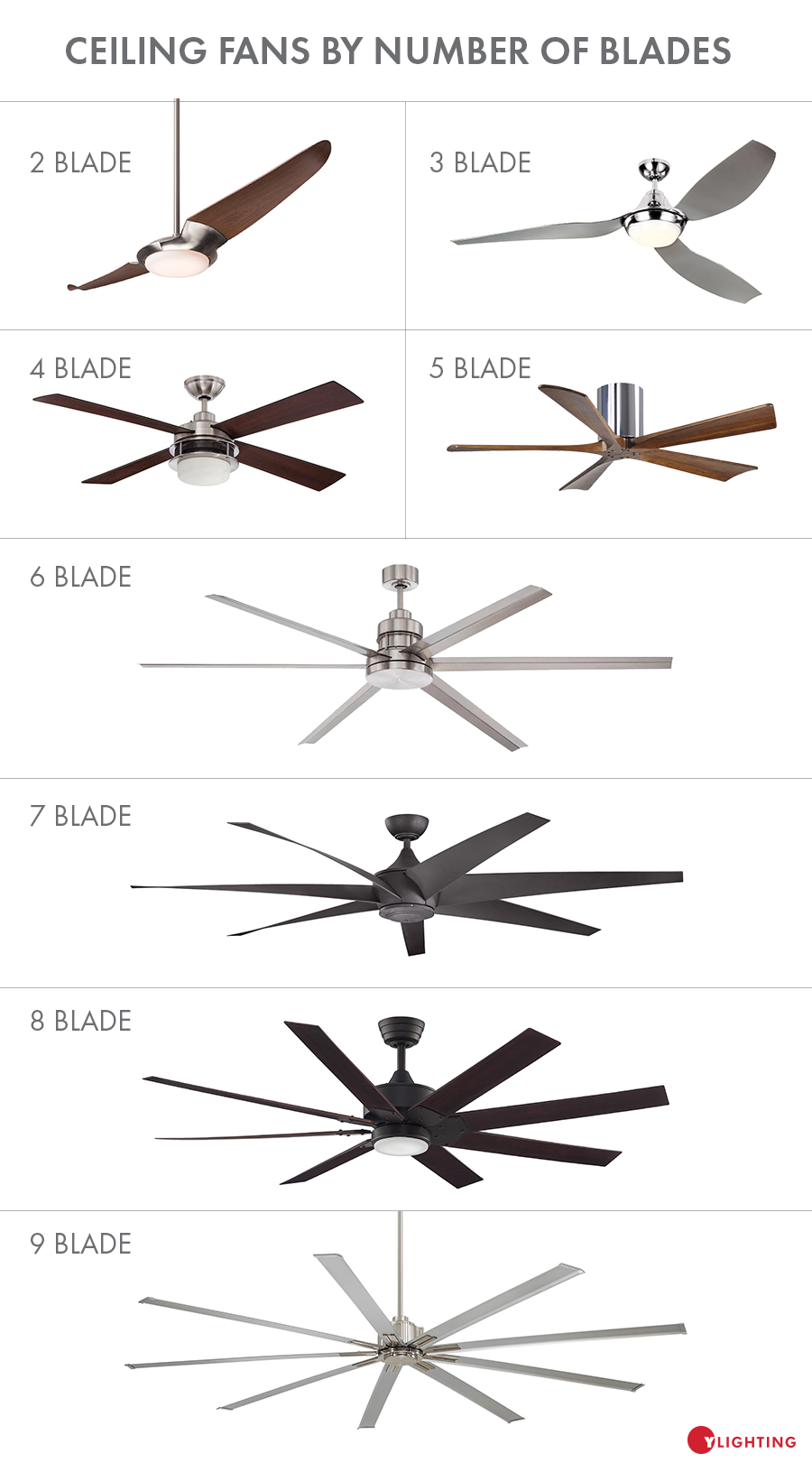
Ceiling Fans Room Size Chart
Ceiling Fans Room Size Chart - Large rooms up to 400 square feet = 36 to 50 inches. Web most ceiling fans are between 42 and 48 inches in diameter, and they work well for spaces from 75 to 175 square feet. Because most ceiling fans on the market are in this size category, you have your greatest range of style options with this size. Web learning how to measure ceiling fan size involves determining the important factors that influence fan size, including the square footage of the room, the height of the ceiling, the span of the ceiling fan and the length of the downrod. Then, multiply those two numbers together—that’s the square footage of your room and that’s what we’ll use to find your ideal fan size. Energy star® makes the following recommendations for ceiling fan diameter: Once you know the room’s square footage, use your measurements to select the right fan size. Great rooms over 400 square feet = 50 to 71 inches. Web our ceiling fan size calculator gives accurate data for sizing a ceiling fan. Web how to use your measurements to select a fan size. Once you know the room’s square footage, use your measurements to select the right fan size. Web to get the most out of a ceiling fan, first select the right size. Large rooms up to 400 square feet = 36 to 50 inches. This chart shows basic ranges and the rooms typically in the size range. Energy star® makes the following recommendations for ceiling fan diameter: Refer to the following chart to coordinate the square footage of your space with the appropriate blade span to provide optimal air circulation. This size guide is valid for standard 8 ft ceiling height. Web learning how to measure ceiling fan size involves determining the important factors that influence fan size, including the square footage of the room, the height of the ceiling, the span of the ceiling fan and the length of the downrod. Web how to use your measurements to select a fan size. Web to get the right size ceiling fan, you’ll need to measure the room’s length and width in feet. Great rooms over 400 square feet = 50 to 71 inches. Then, multiply those two numbers together—that’s the square footage of your room and that’s what we’ll use to find your ideal fan size. Web learning how to measure ceiling fan size involves determining the important factors that influence fan size, including the square footage of the room, the height. Because most ceiling fans on the market are in this size category, you have your greatest range of style options with this size. Then, multiply those two numbers together—that’s the square footage of your room and that’s what we’ll use to find your ideal fan size. Large rooms up to 400 square feet = 36 to 50 inches. Refer to. Energy star® makes the following recommendations for ceiling fan diameter: Great rooms over 400 square feet = 50 to 71 inches. Then, multiply those two numbers together—that’s the square footage of your room and that’s what we’ll use to find your ideal fan size. Web the ceiling fan size guide below includes both the room sizes (in square feet and. Web how to use your measurements to select a fan size. Square footage to ceiling fan size chart Web our ceiling fan size calculator gives accurate data for sizing a ceiling fan. Great rooms over 400 square feet = 50 to 71 inches. Then, multiply those two numbers together—that’s the square footage of your room and that’s what we’ll use. Refer to the following chart to coordinate the square footage of your space with the appropriate blade span to provide optimal air circulation. Because most ceiling fans on the market are in this size category, you have your greatest range of style options with this size. Web our ceiling fan size calculator gives accurate data for sizing a ceiling fan.. Web learning how to measure ceiling fan size involves determining the important factors that influence fan size, including the square footage of the room, the height of the ceiling, the span of the ceiling fan and the length of the downrod. Because most ceiling fans on the market are in this size category, you have your greatest range of style. Refer to the following chart to coordinate the square footage of your space with the appropriate blade span to provide optimal air circulation. Web most ceiling fans are between 42 and 48 inches in diameter, and they work well for spaces from 75 to 175 square feet. Web how to use your measurements to select a fan size. Once you. Web most ceiling fans are between 42 and 48 inches in diameter, and they work well for spaces from 75 to 175 square feet. Web learning how to measure ceiling fan size involves determining the important factors that influence fan size, including the square footage of the room, the height of the ceiling, the span of the ceiling fan and. Web to get the most out of a ceiling fan, first select the right size. Energy star® makes the following recommendations for ceiling fan diameter: Web most ceiling fans are between 42 and 48 inches in diameter, and they work well for spaces from 75 to 175 square feet. Web our ceiling fan size calculator gives accurate data for sizing. Small rooms up to 100 square feet = 29 to 36 inches. Refer to the following chart to coordinate the square footage of your space with the appropriate blade span to provide optimal air circulation. This chart shows basic ranges and the rooms typically in the size range. Once you know the room’s square footage, use your measurements to select. Web to get the most out of a ceiling fan, first select the right size. Web our ceiling fan size calculator gives accurate data for sizing a ceiling fan. Web most ceiling fans are between 42 and 48 inches in diameter, and they work well for spaces from 75 to 175 square feet. Energy star® makes the following recommendations for ceiling fan diameter: Web learning how to measure ceiling fan size involves determining the important factors that influence fan size, including the square footage of the room, the height of the ceiling, the span of the ceiling fan and the length of the downrod. Great rooms over 400 square feet = 50 to 71 inches. Web to get the right size ceiling fan, you’ll need to measure the room’s length and width in feet. This chart shows basic ranges and the rooms typically in the size range. Small rooms up to 100 square feet = 29 to 36 inches. Then, multiply those two numbers together—that’s the square footage of your room and that’s what we’ll use to find your ideal fan size. Square footage to ceiling fan size chart Because most ceiling fans on the market are in this size category, you have your greatest range of style options with this size. This size guide is valid for standard 8 ft ceiling height. Refer to the following chart to coordinate the square footage of your space with the appropriate blade span to provide optimal air circulation.Ceiling Fan Size Chart

Ceiling Fans Size Chart
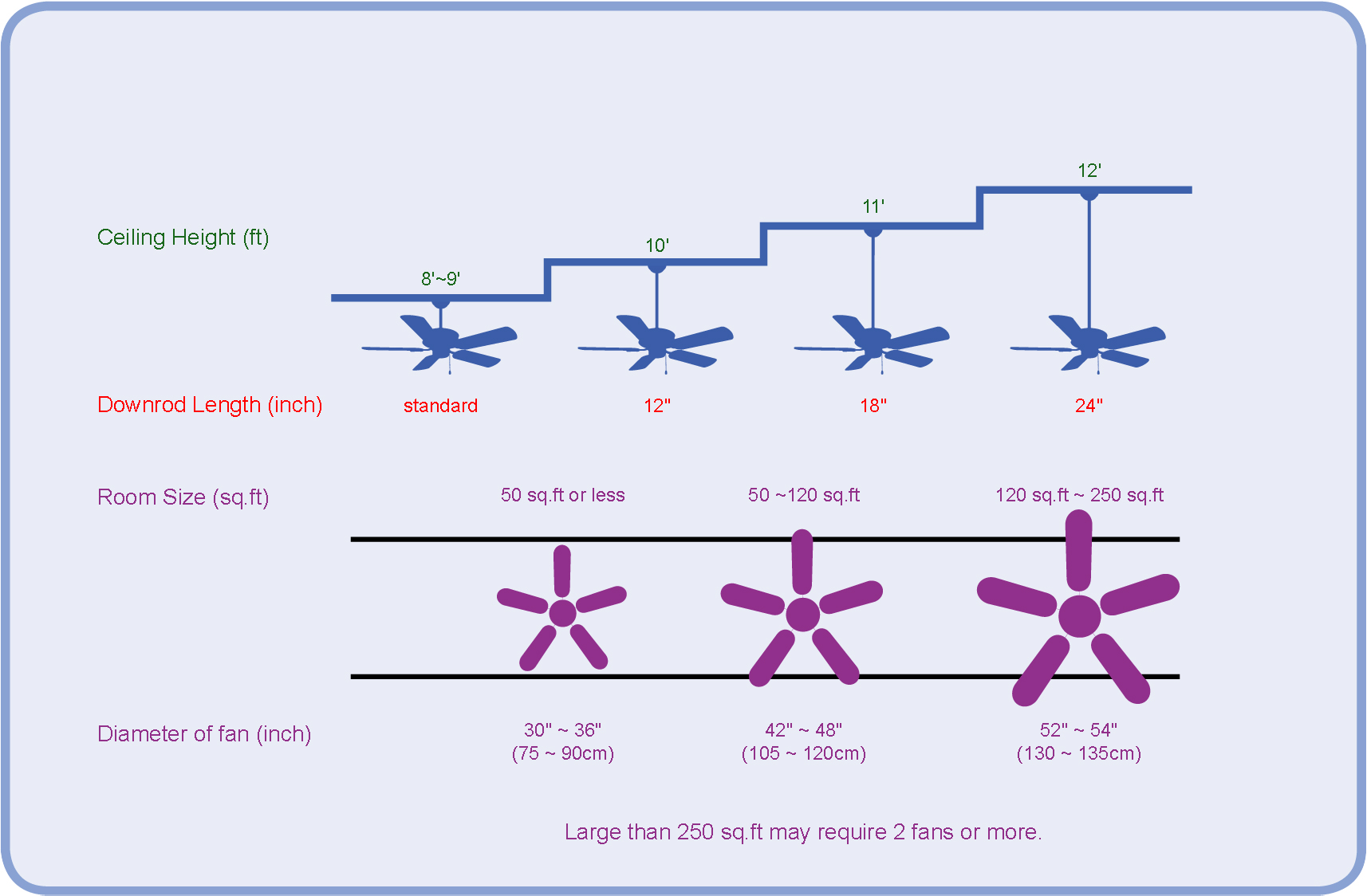
Ceiling fan dimensions the right celling fan dimension for your room
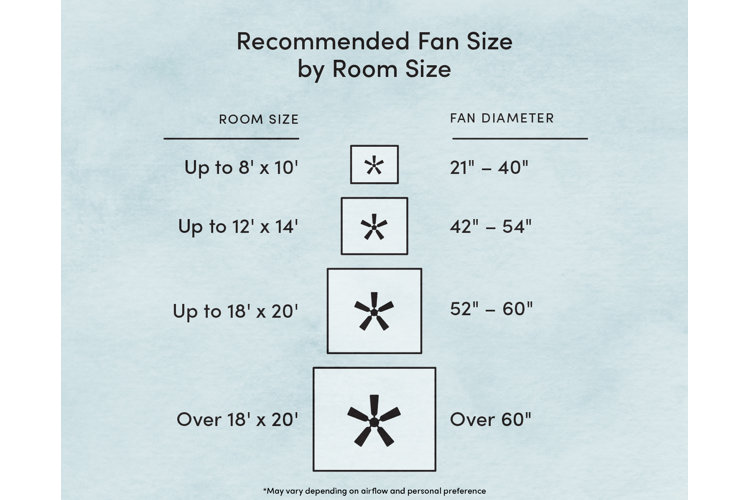
What Size Ceiling Fan Should You Get? Wayfair

Ceiling Fan Room Size Chart

Ceiling Fan Sizing Guide Find the Right Fan for Your Room!
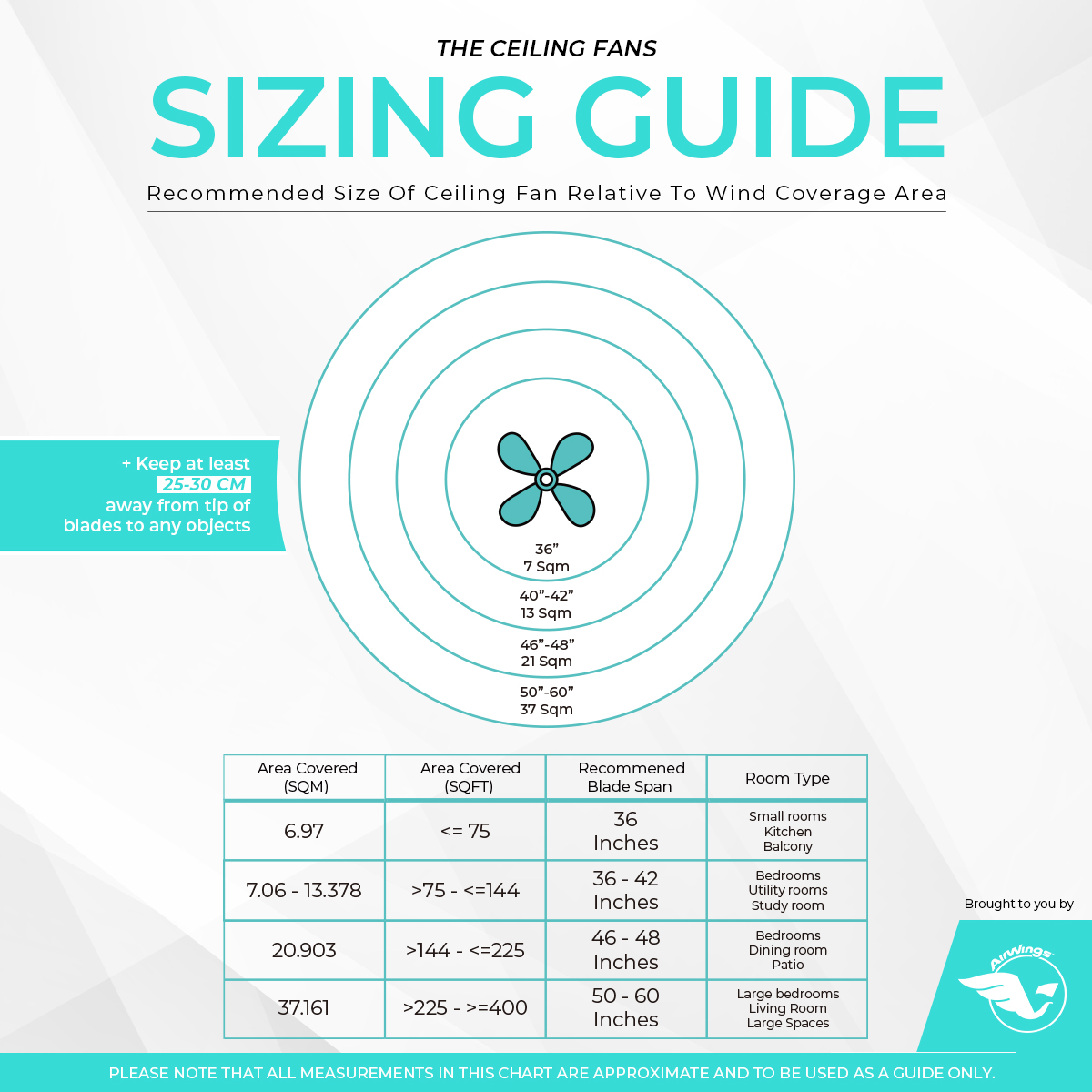
Ceiling Fan The Ceiling Fans Sizing Guide

How to Size a Ceiling Fan Rensen House of Lights
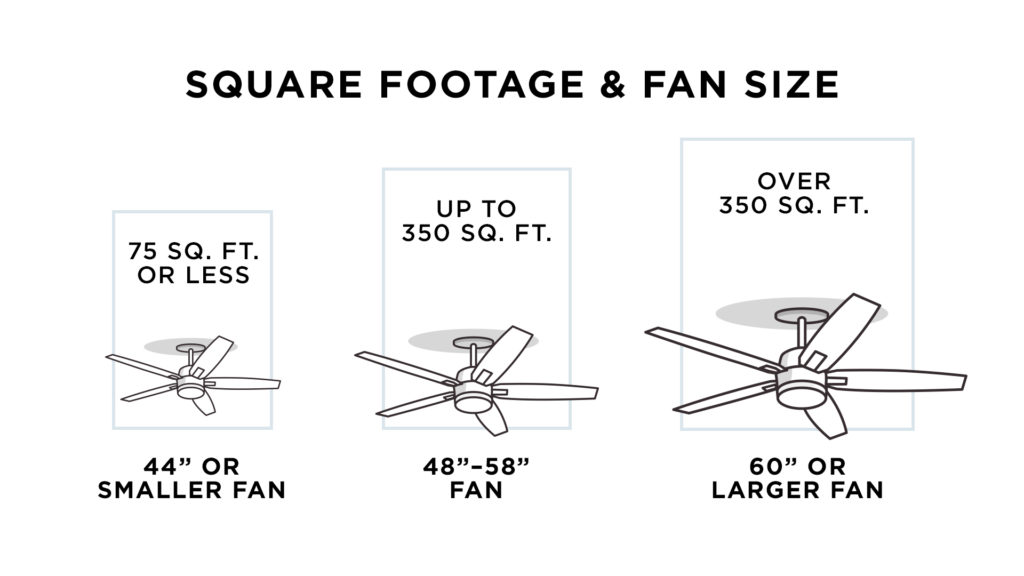
Quick Guide Buying a Ceiling Fan Ideas & Advice Lamps Plus
Ceiling Fan Size For Room All You Need Infos
Web How To Use Your Measurements To Select A Fan Size.
Web The Ceiling Fan Size Guide Below Includes Both The Room Sizes (In Square Feet And Width×Length), Ceiling Fan Blade Size Appropriate For Such Rooms, As Well As Estimated Cfm Airflow Output.
Large Rooms Up To 400 Square Feet = 36 To 50 Inches.
Once You Know The Room’s Square Footage, Use Your Measurements To Select The Right Fan Size.
Related Post: