
Gram Positive Chart
Gram Positive Chart - Gram negative bacteria lack this thick coating. “gram positive cocci in clusters” may suggest staphylococcus species. Actinomyces, bacillus, clostridium, corynebacterium, enterococcus, gardnerella, lactobacillus, listeria, mycoplasma, nocardia, staphylococcus, streptococcus, streptomyces ,etc. Move your mouse over an item on the graphic and if your arrow turns into a hand click on it and you will go to another place in the notebook.) click on gram positives to determine how and when to perform the tests indicated above. Web interpretation of key phrases. Identify similarities and differences between high g+c and low g+c bacterial groups. Give an example of a bacterium of high g+c and low g+c group commonly associated with each category. They can be found in a variety of environments and can be harmless or pathogenic to humans and other organisms. Associate various biochemical tests with their correct applications. The antibiotics listed are active against e.faecalis, but have limited activity for e.faecium. In a gram stain test, these organisms yield a positive result. Gram project is a medical education resource website containing diagrams, tables and flowcharts for all your quick referencing, revision and teaching needs. The antibiotics listed are active against e.faecalis, but have limited activity for e.faecium. Web gram positive bacteria types and classification. Identify similarities and differences between high g+c and low g+c bacterial groups. They can be found in a variety of environments and can be harmless or pathogenic to humans and other organisms. Give an example of a bacterium of high g+c and low g+c group commonly associated with each category. Interpret the results of biochemical methods. They have thick cell walls. Move your mouse over an item on the graphic and if your arrow turns into a hand click on it and you will go to another place in the notebook.) click on gram positives to determine how and when to perform the tests indicated above. “branching gram positive rods, modified acid fast stain positive” may suggest nocardia or streptomyces species. “gram positive cocci in clusters” may suggest staphylococcus species. Web interpretation of key phrases. Gram positive cocci in pairs and chains may suggest streptococcus species or enterococcus species. Give an example of a bacterium of high g+c and low g+c group commonly associated with each. Gram project is a medical education resource website containing diagrams, tables and flowcharts for all your quick referencing, revision and teaching needs. Web gram positive bacteria have a thick coating of peptidoglycan and stain purple with crystal violet. They have thick cell walls. Associate various biochemical tests with their correct applications. Give an example of a bacterium of high g+c. Web use flowcharts and identification charts to identify some common aerobic gram positive microorganisms. Gram staining works by differentiating bacteria by the chemical and physical properties of their cell walls. Give an example of a bacterium of high g+c and low g+c group commonly associated with each category. Web interpretation of key phrases. (the graphic below is clickable. Actinomyces, bacillus, clostridium, corynebacterium, enterococcus, gardnerella, lactobacillus, listeria, mycoplasma, nocardia, staphylococcus, streptococcus, streptomyces ,etc. “branching gram positive rods, modified acid fast stain positive” may suggest nocardia or streptomyces species. Web aerobic gram positive rods flowchart. Gram negative bacteria lack this thick coating. (the graphic below is clickable. Gram project is a medical education resource website containing diagrams, tables and flowcharts for all your quick referencing, revision and teaching needs. Gram positive cocci in pairs and chains may suggest streptococcus species or enterococcus species. During the gram staining process — a test that experts use to view the bacteria under a microscope — they appear purple or. Interpret. Web gram positive bacteria types and classification. Gram project is a medical education resource website containing diagrams, tables and flowcharts for all your quick referencing, revision and teaching needs. Web gram positive cocci are a group of bacteria that cause various infections in humans. They have thick cell walls. Bacillus, clostridium, corynebacterium, listeria ,. They don’t retain crystal violet, so are stained red or pink with carbol fuchsin or safranin. Gram project is a medical education resource website containing diagrams, tables and flowcharts for all your quick referencing, revision and teaching needs. The antibiotics listed are active against e.faecalis, but have limited activity for e.faecium. Identify similarities and differences between high g+c and low. But, some bacteria stain either as gram positive or gram negative, depending on conditions. Web gram positive cocci are a group of bacteria that cause various infections in humans. During the gram staining process — a test that experts use to view the bacteria under a microscope — they appear purple or. The antibiotics listed are active against e.faecalis, but. Web interpretation of key phrases. Actinomyces, bacillus, clostridium, corynebacterium, enterococcus, gardnerella, lactobacillus, listeria, mycoplasma, nocardia, staphylococcus, streptococcus, streptomyces ,etc. Web gram positive flow chart. They don’t retain crystal violet, so are stained red or pink with carbol fuchsin or safranin. (the graphic below is clickable. Gram negative bacteria lack this thick coating. Web gram positive bacteria have a thick coating of peptidoglycan and stain purple with crystal violet. Learn more from the experts at uptodate. Interpret the results of biochemical methods. Give an example of a bacterium of high g+c and low g+c group commonly associated with each category. They have thick cell walls. Actinomyces, bacillus, clostridium, corynebacterium, enterococcus, gardnerella, lactobacillus, listeria, mycoplasma, nocardia, staphylococcus, streptococcus, streptomyces ,etc. Web aerobic gram positive rods flowchart. In a gram stain test, these organisms yield a positive result. Web gram positive cocci are a group of bacteria that cause various infections in humans. “branching gram positive rods, modified acid fast stain positive” may suggest nocardia or streptomyces species. Gram staining works by differentiating bacteria by the chemical and physical properties of their cell walls. The antibiotics listed are active against e.faecalis, but have limited activity for e.faecium. Identify similarities and differences between high g+c and low g+c bacterial groups. Web gram positive bacteria have a thick coating of peptidoglycan and stain purple with crystal violet. The bacterial cell wall of these organisms have thick peptidoglycan layers, which take up the purple/violet stain. Web gram positive flow chart. Web interpretation of key phrases. (the graphic below is clickable. Associate various biochemical tests with their correct applications. Gram negative bacteria lack this thick coating.
Gram Positive Flow Chart
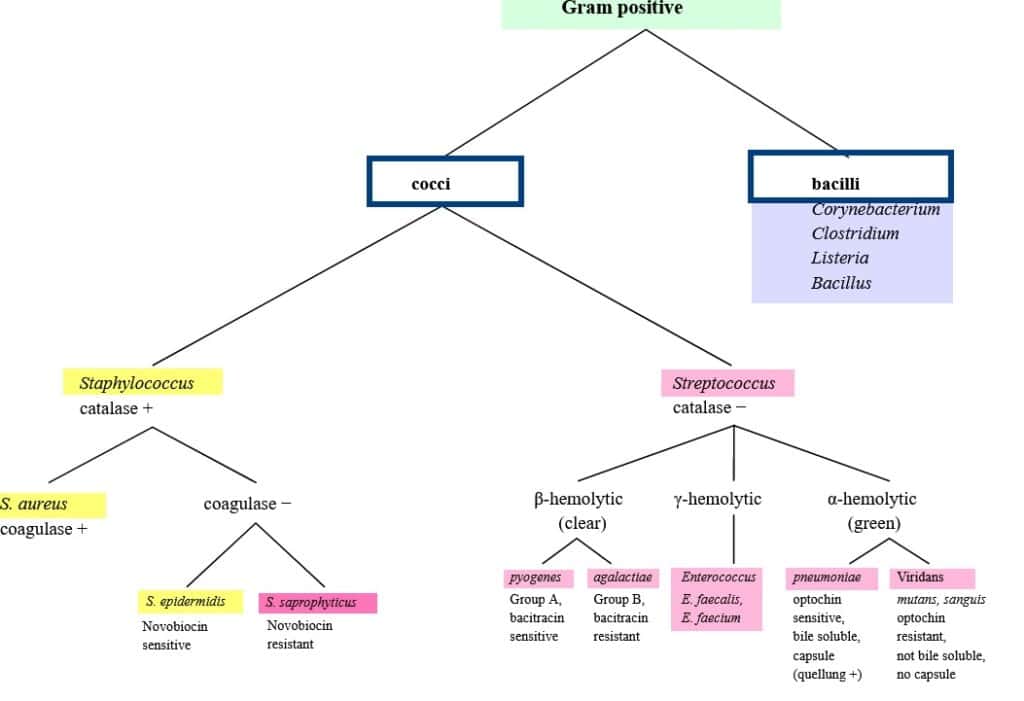
Gram Positive Organisms Chart

Antibiotic Susceptibility Table for Routine Gram Positive GrepMed

Gram Positive Organisms Chart

Gram Positive Bacteria Flow Chart Diagram Quizlet

Microbiology Gram Positive Cocci Flow Chart Gram Positive Cocci

MBBS Medicine (Humanity First) Gram positive Cocci Classification

Identification of Gram positive bacteria Microbiology, Medical
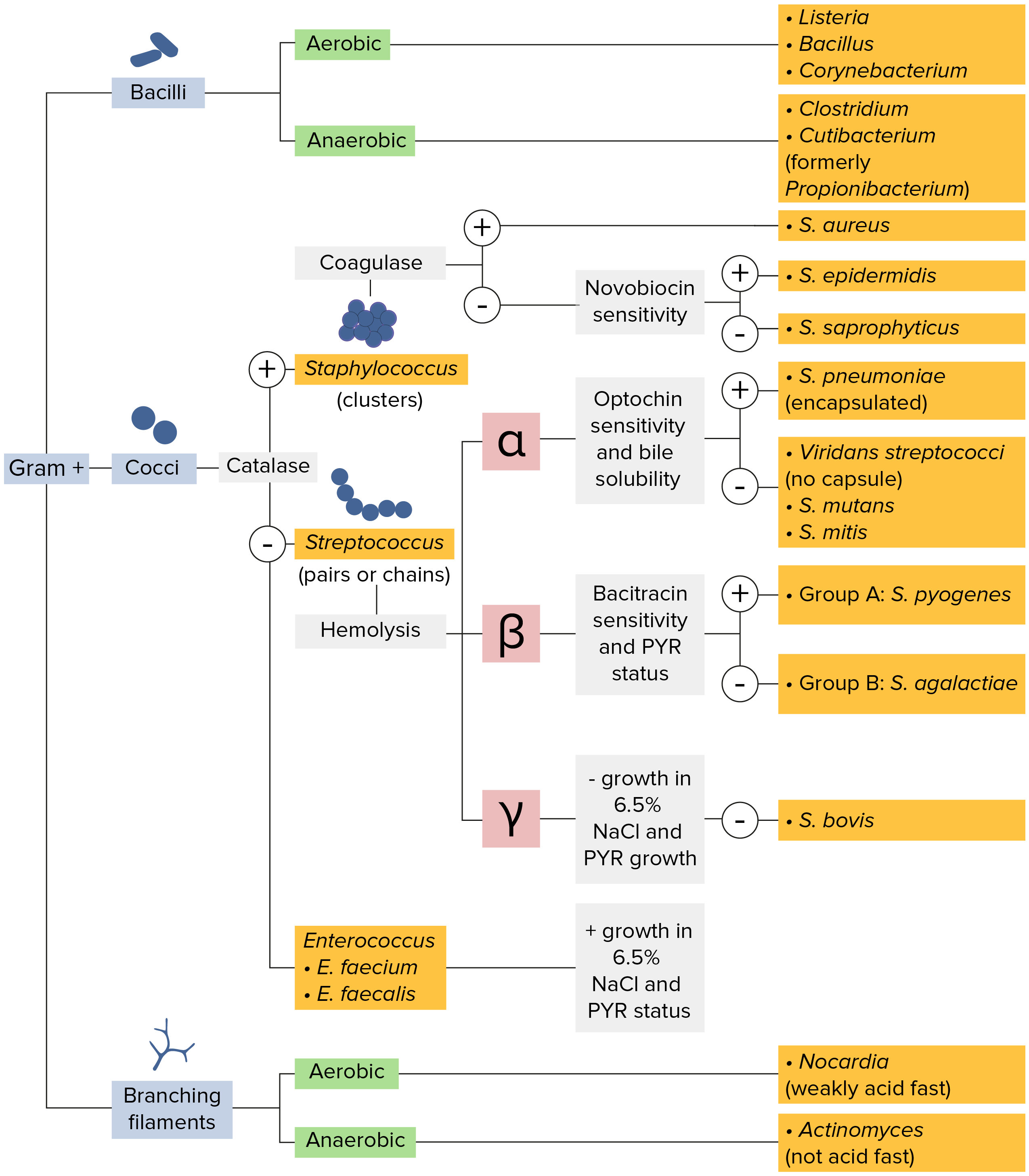
Streptococcus Concise Medical Knowledge

Gram Positive Cocci Identification Chart
Gram Positive Cocci In Pairs And Chains May Suggest Streptococcus Species Or Enterococcus Species.
During The Gram Staining Process — A Test That Experts Use To View The Bacteria Under A Microscope — They Appear Purple Or.
They Don’t Retain Crystal Violet, So Are Stained Red Or Pink With Carbol Fuchsin Or Safranin.
Here’s Why Knowing Whether The Result Is Positive Or Negative Is.
Related Post: