
Turn And Talk Anchor Chart
Turn And Talk Anchor Chart - Pose a question or prompt for students to discuss and tell them how much time they will have. Here are some of my favorites from pinterest: Pair your students with shoulder partners and teach them the correct way to discuss new topics. Students are provided with a short prompt to discuss content or a skill. Explain to the students that during lessons, they will often be asked to turn to their neighbor and talk about. Have students turn to a specific partner. Display this in the classroom. Pair students using eyeball partners, shoulder partners, or clock partners (see variations below). Pose a question or prompt for students to discuss and tell them how much time they will have. This is effectively done with visual and concrete anchor charts. Pose a question or prompt for students to discuss and tell them how much time they will have. Web in their book hands down speak out, authors kassia omohundro wedekind and christy hermann thompson offer terrific ideas on how to slow down and explicitly teach students how to listen and speak to one another. Web create and post an anchor chart with cues to teach and reinforce the process. Pair students using eyeball partners, shoulder partners, or clock partners (see variations below). Students are provided with a short prompt to discuss content or a skill. Create an anchor chart with your students about your turn and talk expectations. Pose a question or prompt for students to discuss and tell them how much time they will have. Have students turn to a specific partner. Have students turn to a specific partner. Web how to use. Web how to use. Web create and post an anchor chart with cues to teach and reinforce the process. Explain to the students that during lessons, they will often be asked to turn to their neighbor and talk about. This is effectively done with visual and concrete anchor charts. Pair your students with shoulder partners and teach them the correct. Display this in the classroom. Web in their book hands down speak out, authors kassia omohundro wedekind and christy hermann thompson offer terrific ideas on how to slow down and explicitly teach students how to listen and speak to one another. Web how to use. Have students turn to a specific partner. This is effectively done with visual and concrete. Here are some of my favorites from pinterest: Web create and post an anchor chart with cues to teach and reinforce the process. Web create a turn and talk anchor chart. Pair students using eyeball partners, shoulder partners, or clock partners (see variations below). Pair students using eyeball partners, shoulder partners, or clock partners (see variations below). Pair students using eyeball partners, shoulder partners, or clock partners (see variations below). Pose a question or prompt for students to discuss and tell them how much time they will have. This is effectively done with visual and concrete anchor charts. Pair your students with shoulder partners and teach them the correct way to discuss new topics. Create an anchor. Pose a question or prompt for students to discuss and tell them how much time they will have. This is effectively done with visual and concrete anchor charts. Here are some of my favorites from pinterest: Pair students using eyeball partners, shoulder partners, or clock partners (see variations below). Create an anchor chart with your students about your turn and. Web in their book hands down speak out, authors kassia omohundro wedekind and christy hermann thompson offer terrific ideas on how to slow down and explicitly teach students how to listen and speak to one another. Web create and post an anchor chart with cues to teach and reinforce the process. Web create a turn and talk anchor chart. Display. Web create a turn and talk anchor chart. Pose a question or prompt for students to discuss and tell them how much time they will have. Have students turn to a specific partner. Display this in the classroom. Have students turn to a specific partner. Pose a question or prompt for students to discuss and tell them how much time they will have. Web how to use. Display this in the classroom. Pair students using eyeball partners, shoulder partners, or clock partners (see variations below). Web turn and talk is an instructional routine in which students use content knowledge during a brief conversation with a. Pose a question or prompt for students to discuss and tell them how much time they will have. Create an anchor chart with your students about your turn and talk expectations. Explain to the students that during lessons, they will often be asked to turn to their neighbor and talk about. This is effectively done with visual and concrete anchor. This is effectively done with visual and concrete anchor charts. Have students turn to a specific partner. Explain to the students that during lessons, they will often be asked to turn to their neighbor and talk about. Pair your students with shoulder partners and teach them the correct way to discuss new topics. Web how to use. Pair students using eyeball partners, shoulder partners, or clock partners (see variations below). This is effectively done with visual and concrete anchor charts. Create an anchor chart with your students about your turn and talk expectations. Pair your students with shoulder partners and teach them the correct way to discuss new topics. Web turn and talk is an instructional routine in which students use content knowledge during a brief conversation with a peer. Students are provided with a short prompt to discuss content or a skill. Web how to use. Pose a question or prompt for students to discuss and tell them how much time they will have. Web in their book hands down speak out, authors kassia omohundro wedekind and christy hermann thompson offer terrific ideas on how to slow down and explicitly teach students how to listen and speak to one another. Have students turn to a specific partner. Have students turn to a specific partner. Web create a turn and talk anchor chart. Pair students using eyeball partners, shoulder partners, or clock partners (see variations below). Web create and post an anchor chart with cues to teach and reinforce the process.
Turn and Talk Anchor Chart for TK and Kindergarteners

12 best images about Turn and Talk on Pinterest Other, Student and

Partner Talk Anchor Chart by Teach Simple

Anchor chartturn and talk Classroom anchor charts, Anchor charts

Math StrategyTurn and Talk Classroom anchor charts, Turn and talk

Turn and talk anchor chart. Kindergarten Anchor Charts, Reading Anchor

How to Turn and Talk Anchor Chart Lucky Little Learners
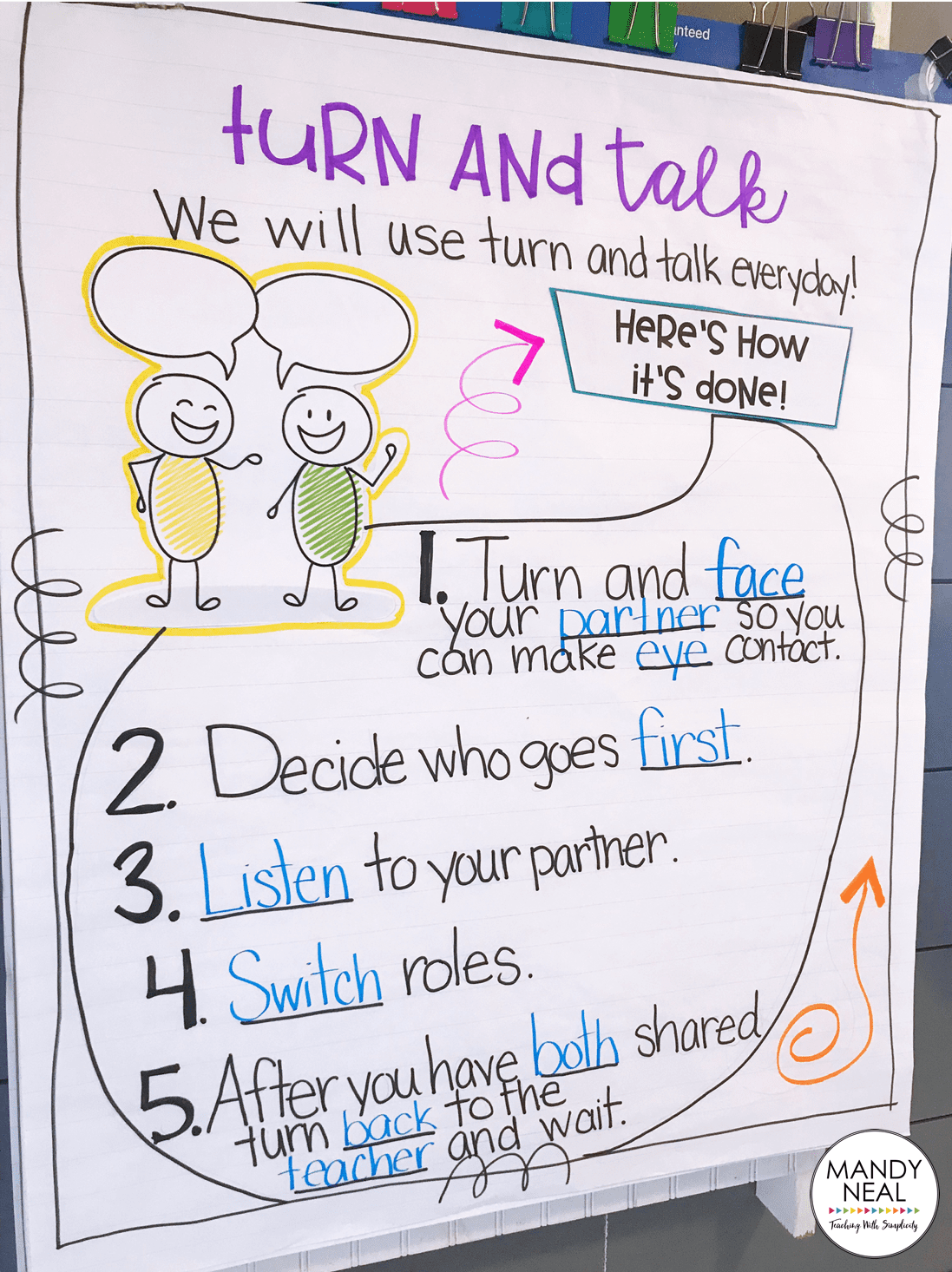
Turn And Talk Anchor Chart

17 Best images about PreK on Pinterest Units of measurement

turn and talk accountable talk Anchor Charts Pinterest
Pose A Question Or Prompt For Students To Discuss And Tell Them How Much Time They Will Have.
Here Are Some Of My Favorites From Pinterest:
Explain To The Students That During Lessons, They Will Often Be Asked To Turn To Their Neighbor And Talk About.
Display This In The Classroom.
Related Post: